Aggregates
Aggregates are the raw materials—such as sand, gravel, crushed stone, or recycled concrete—used to create concrete, asphalt, and other construction materials. They make up about 60–75% of concrete’s total volume and are essential for strength, stability, and durability.
There are two main types:
- Fine aggregates: like sand or crushed stone dust, which fill small gaps and create a smooth mix.
- Coarse aggregates: like gravel or crushed rock, which provide structure and strength.
Together, aggregates help reduce shrinkage, improve workability, and ensure a strong, long-lasting finished product.
#57 Stone (Blend)
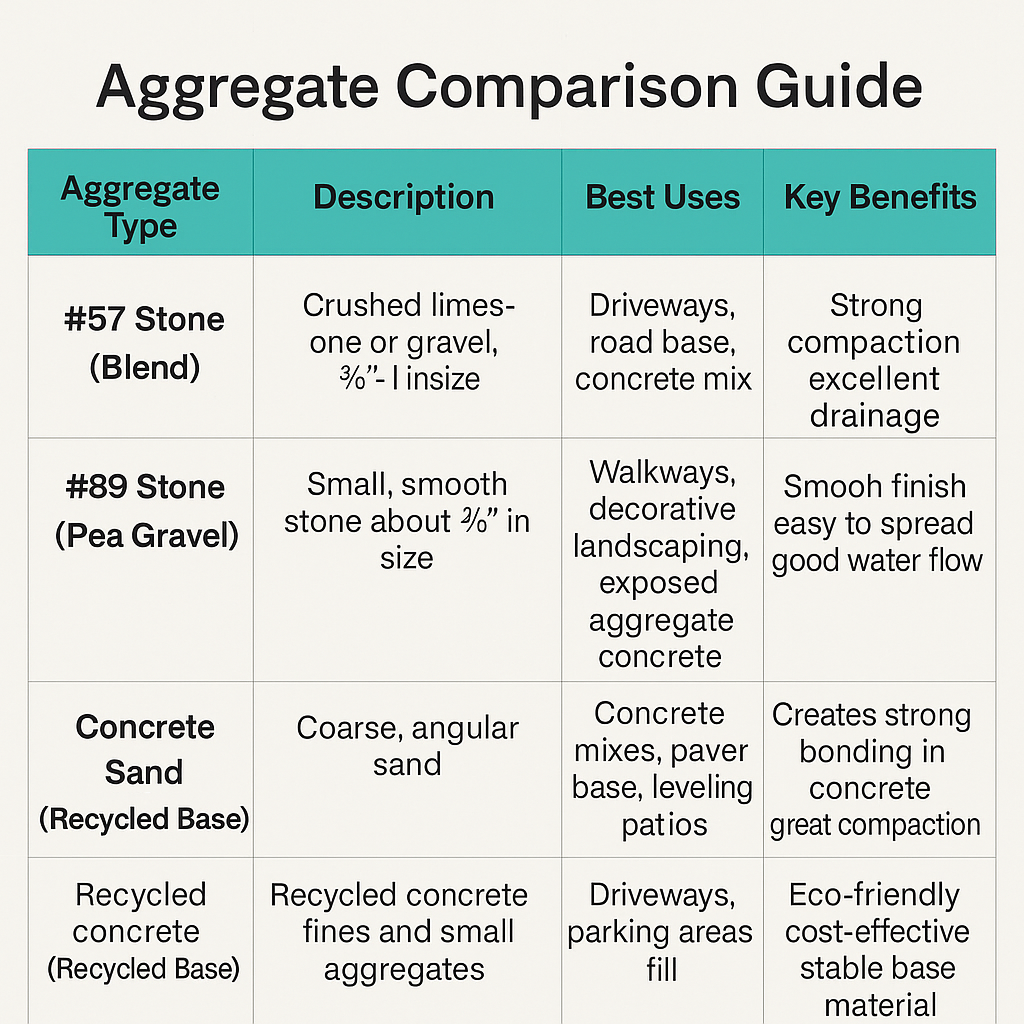
#57 Stone (Blend) is a type of crushed aggregate commonly used in concrete mixes, drainage systems, and construction projects. It consists of crushed stone pieces typically between ¾ inch and 1 inch in size, creating a well-graded blend that allows for excellent drainage, compaction, and stability.
Made from materials like limestone, granite, or gravel, #57 stone is often used for driveways, concrete bases, road construction, and backfill. When blended into concrete, it enhances strength and durability by reducing voids and improving load-bearing capacity, making it one of the most versatile and widely used aggregates in construction.
#89 Stone (Pea Gravel)
#89 Stone (Pea Gravel) is a small, smooth aggregate made up of crushed stone or natural gravel typically measuring about ⅜ inch in size. Known for its round shape and uniform texture, it provides excellent drainage and a decorative finish.
This aggregate is commonly used for driveways, walkways, concrete mixes, landscaping, and drainage applications. In concrete, #89 stone helps improve workability and finish, while in landscaping it adds a clean, polished look. Its compact size makes it ideal for areas that require a smooth surface and good water flow without large gaps or rough textures.
Concrete Sand
Concrete sand is a coarse, washed sand used as a key ingredient in concrete, mortar, and asphalt mixes. It consists of angular grains that provide excellent bonding, compaction, and drainage.
Unlike fine or play sand, concrete sand has a slightly rough texture that helps cement and aggregate bind together, creating a strong and stable mix. It’s commonly used for mixing concrete, laying pavers, creating a stable base for slabs or patios, and improving soil drainage. Its strength, consistency, and versatility make it one of the most important aggregates in construction.
Concrete Washout
Concrete washout is the residual material left after cleaning concrete trucks, mixers, or equipment—a mix of water, sand, cement, and small aggregates. When properly processed and recycled, concrete washout can be reused as an aggregate material for construction purposes.
In this form, concrete washout aggregate is often used as base material for driveways, parking areas, and fill projects, offering a cost-effective and environmentally friendly alternative to virgin stone. It provides good compaction and drainage, making it suitable for non-structural applications where recycled materials are desired.